
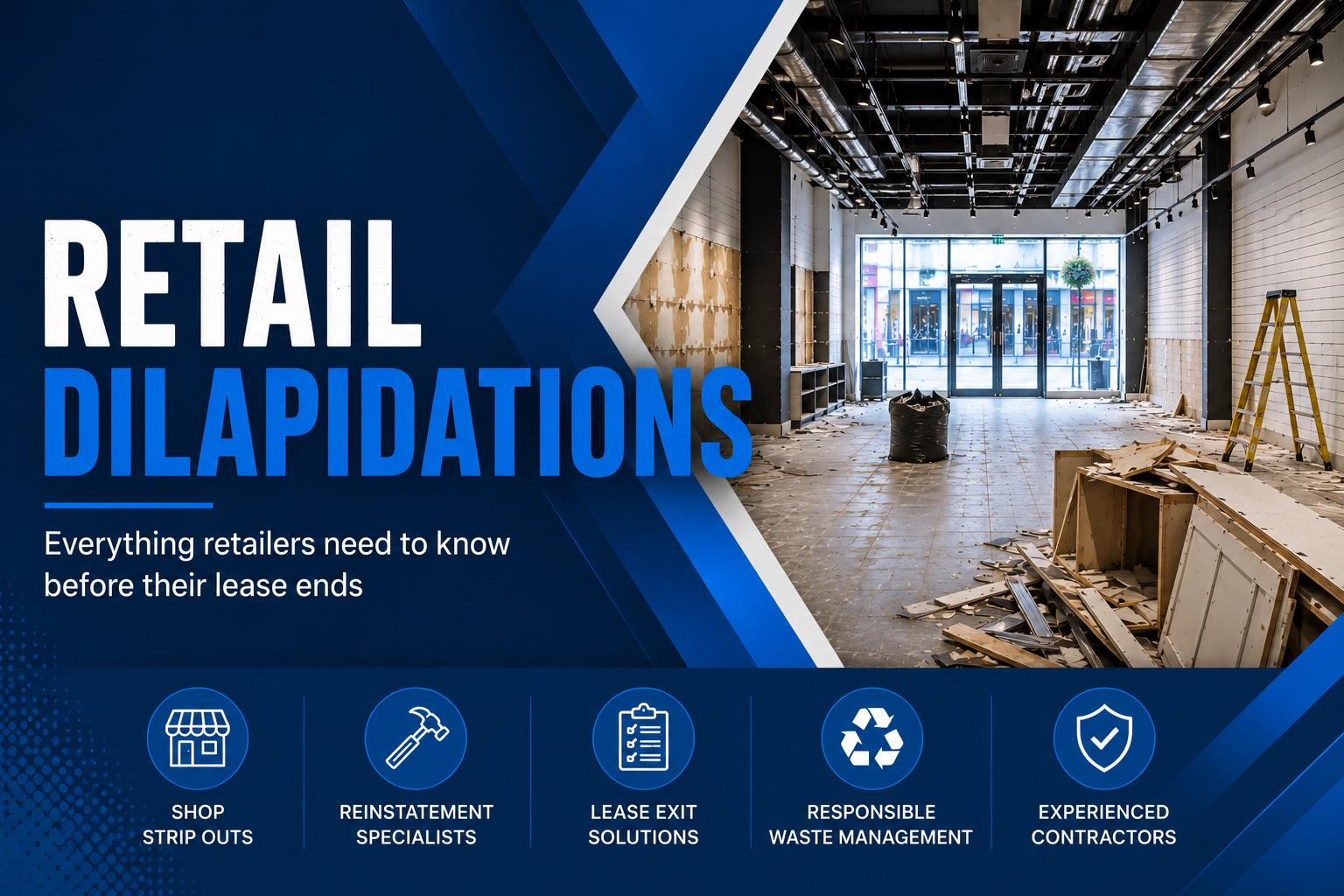
Closing or relocating a retail premises involves much more than simply removing stock and handing the keys back to the landlord.
Most commercial leases require tenants to return the property to an agreed condition before the lease expires. This process is known as retail dilapidations, and failing to complete the required works could result in expensive claims from the landlord.
Whether you operate a boutique, showroom, supermarket, retail park unit or high street shop, understanding your responsibilities before lease expiry can save significant time and money.
What Are Retail Dilapidations?
Retail dilapidations refer to the repairs, reinstatement works and alterations that must be completed when a commercial retail lease comes to an end.
During the tenancy, retailers often make changes to suit their business, including:
- Installing shop fittings
- Creating display areas
- Building changing rooms
- Installing feature lighting
- Adding branded counters
- Constructing storage rooms
- Installing shelving systems
- Altering flooring
- Decorating to company branding
Once the lease expires, landlords frequently require these alterations to be removed and the premises restored.
If you’re unsure what’s involved, our 👉 Retail Dilapidation Services page explains the complete lease exit process.
Why Retail Properties Require Specialist Dilapidation Contractors
Retail premises differ significantly from offices and warehouses.
Projects often need to be completed within shopping centres, busy high streets or retail parks where working hours, public safety and neighbouring businesses all need careful consideration.
Experienced retail contractors understand how to:
- Remove shop fittings safely
- Protect communal areas
- Minimise disruption
- Coordinate deliveries
- Manage waste efficiently
- Complete projects to strict deadlines
Professional planning helps retailers vacate premises smoothly while reducing the risk of additional landlord costs.
Common Retail Dilapidation Works
Every retail unit is different, but the most common lease-end works include:
- Shop strip outs
- Display removal
- Shelving dismantling
- Counter removal
- Signage removal
- Flooring removal
- Ceiling repairs
- Decorating
- Electrical alterations
- Air conditioning removal
- Waste clearance
- Property reinstatement
Many landlords also require walls, ceilings and flooring to be restored before final inspections.
Don’t Leave Dilapidations Until the Last Minute
One of the biggest mistakes retailers make is waiting until the final few weeks of their lease.
A professional dilapidation project may involve multiple contractors, waste removal, electrical works, repairs and reinstatement.
Starting early allows time to:
- Review lease obligations
- Obtain quotations
- Schedule contractors
- Complete inspections
- Resolve any landlord queries
Beginning preparations several months before lease expiry often reduces overall costs.
What Happens During a Retail Dilapidation Project?
A typical retail dilapidation project follows several stages.
1. Lease Review
The lease is reviewed to identify reinstatement obligations.
2. Site Inspection
The existing condition of the premises is assessed.
3. Strip Out Works
Tenant-installed fixtures and fittings are removed.
4. Repairs & Reinstatement
Walls, ceilings, floors and services are repaired where necessary.
5. Waste Removal
Materials are responsibly removed and recycled wherever possible.
6. Final Inspection
The property is prepared for landlord inspection or the next occupier.
Retail Dilapidations and Sustainability
Modern retail projects generate large volumes of recyclable materials.
Rather than sending everything to landfill, experienced contractors separate materials including:
- Timber
- Steel
- Aluminium
- Glass
- Lighting
- Electrical equipment
- Ceiling grids
Responsible recycling helps reduce environmental impact while supporting sustainable construction practices.
Why Choose One Contractor?
Retail lease exits often involve several different trades.
Using one experienced contractor helps simplify the process by managing:
- Strip outs
- Reinstatement
- Waste removal
- Mechanical works
- Electrical works
- Site management
This reduces delays while ensuring every stage is coordinated efficiently.
Choosing the Right Retail Dilapidation Contractor
When comparing contractors, consider:
- Commercial experience
- Retail project portfolio
- Health & Safety procedures
- Recycling policy
- Project management capability
- Insurance
- Previous client reviews
Retail projects often involve tight deadlines and complex lease obligations, making experience particularly important.
Retail Dilapidations Explained FAQs
When should retail dilapidation works begin?
Ideally several months before lease expiry to allow sufficient time for planning, strip out works and reinstatement.
Can one contractor complete everything?
Yes. Many businesses choose a contractor capable of managing strip outs, reinstatement, repairs and waste clearance under one contract.
Do landlords always require reinstatement?
Not always. Requirements depend entirely on the lease agreement and any schedules of condition.
Can shop fittings be recycled?
Many materials, including steel shelving, timber, aluminium and lighting, can often be recycled rather than disposed of.
Conclusion
Retail dilapidations involve much more than emptying a shop.
From strip out works and reinstatement through to repairs and landlord handover, careful planning helps retailers meet their lease obligations while avoiding unnecessary costs.
Working with experienced commercial contractors ensures projects are completed safely, efficiently and in accordance with lease requirements, allowing businesses to move into their next premises with confidence.
Our related services include:
- Commercial & Industrial Dilapidations
- Warehouse Dilapidations
- Commercial Dilapidations
- Industrial Dilapidations
- Office Dilapidations
- End of Lease Strip Outs
- Property Reinstatement Services
- Strip Out Services
- Site & Factory Clearance
📞 Call: 0208 166 1221
📧 Email: info@hirltd.co.uk
📍 Based near Heathrow, operating nationwide – including Slough, Chiswick, Hounslow, Middlesex, Richmond, Wembley, Windsor, Woking, Twickenham and Staines
👉 Call HIR Ltd today on 0208 166 1221 to discuss your project or request a free quotation.
