
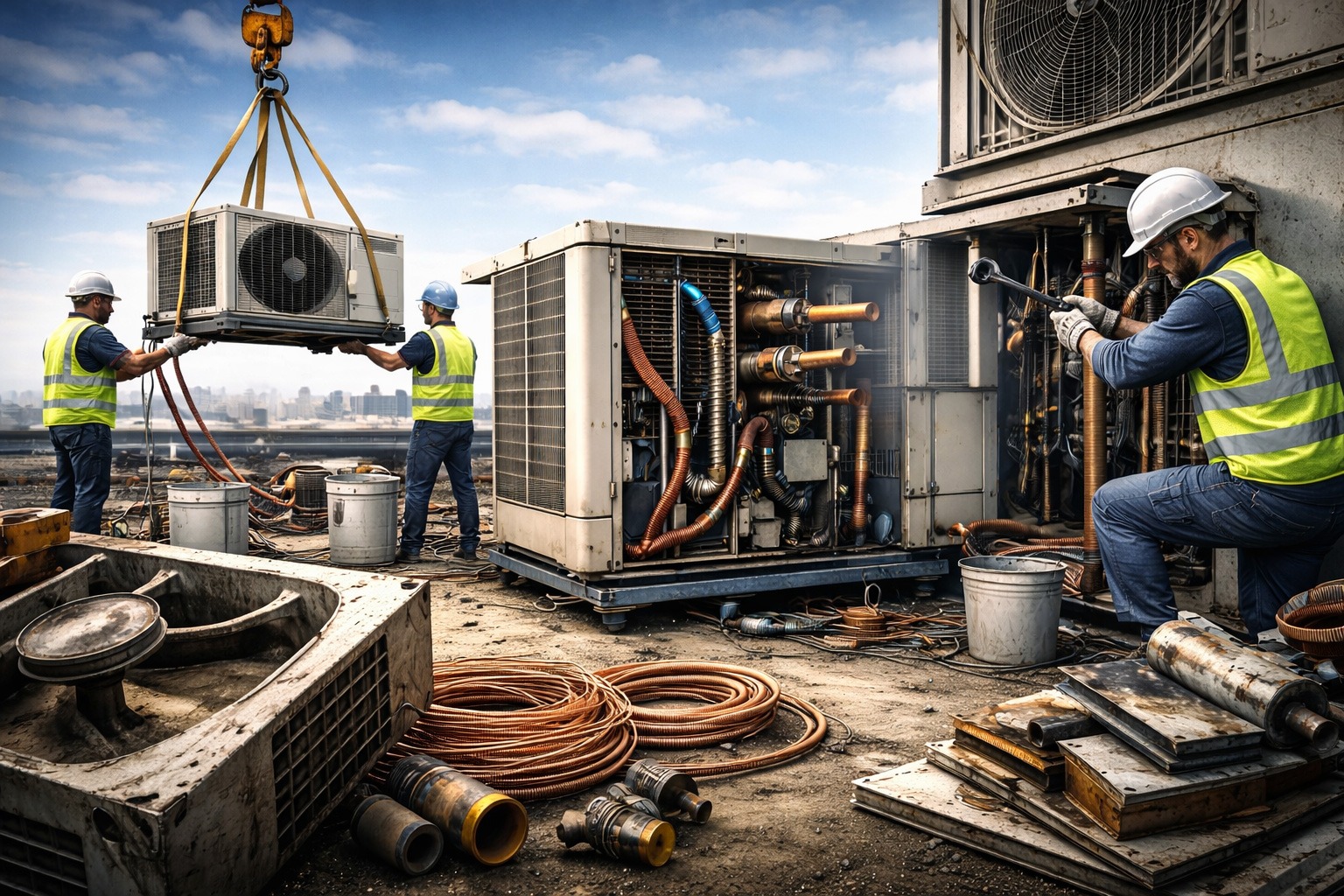
HVAC decommissioning is the process of safely shutting down, disconnecting, and removing heating, ventilation, and air conditioning systems from a building. This includes refrigerant recovery, system dismantling, and compliant disposal in line with UK environmental and safety regulations.
What is HVAC Decommissioning?
HVAC decommissioning involves permanently removing air conditioning and ventilation systems from a property.
This includes:
- System shutdown
- Electrical and mechanical disconnection
- Refrigerant recovery
- Equipment removal and disposal
This is commonly required during:
- Building refurbishments
- System upgrades
- End-of-life equipment removal
- Full site and factory clearance projects
Step-by-Step HVAC Decommissioning Process
1. Site Survey & Planning
Before any work begins, a full site assessment is carried out:
- Type and size of system
- Location (roof, plant room, etc.)
- Access requirements
- Risk assessment
👉 Proper planning ensures safety and efficiency.
2. System Shutdown & Isolation
The system is safely powered down and isolated from:
- Electrical systems
- Pipework
- Controls
👉 This prevents hazards during removal.
3. Refrigerant Recovery
Refrigerants must be removed before dismantling.
This involves:
- Specialist recovery equipment
- Safe storage
- Legal compliance
👉 Required under UK F-Gas regulations.
4. System Disconnection
The system is disconnected from:
- Pipework
- Ducting
- Electrical connections
5. Equipment Dismantling
Systems are broken down into manageable components:
- Compressors
- Condensers
- Pipework
6. Removal & Heavy Lifting
Large systems require:
- Cranes
- Forklifts
- Specialist lifting equipment
7. Recycling & Disposal
Materials are sorted and recycled:
- Copper
- Aluminium
- Steel
👉 Reducing environmental impact.
Why Professional HVAC Decommissioning is Essential
Improper decommissioning can lead to:
- Environmental damage
- Legal non-compliance
- Safety risks
- Structural damage
Professional contractors ensure:
✔ Safe removal
✔ Full compliance
✔ Efficient project delivery
✔ Reduced risk
HVAC Decommissioning Costs UK
Costs depend on:
- System size
- Access
- Complexity
- Refrigerant volume
When Do You Need HVAC Decommissioning?
- Office refurbishments
- Commercial strip outs
- Industrial upgrades
- Building demolition
Often combined with:
HVAC Decommissioning in London & Surrounding Areas
If you require HVAC removal locally, see:
A/C & Chiller Disposal FAQs
What does HVAC decommissioning include?
System shutdown, refrigerant removal, dismantling, and disposal.
Is refrigerant removal required?
Yes – it is a legal requirement in the UK.
How long does HVAC decommissioning take?
From a few hours to several days depending on complexity.
Can HVAC systems be recycled?
Yes – most components can be recycled.
A/C & Chiller Disposal Across London
HIR Ltd provides services across:
- London
- Heathrow
- Slough
- Hounslow
- Wembley
- Richmond
- Windsor
- Woking
- Middlesex
- Chiswick
- Staines
- Twickenham
- Berkshire & Surrey
We support:
- Logistics companies
- Distribution centres
- Commercial landlords
- Developers and contractors
Why Choose HIR Ltd?
HIR Ltd is a London-based contractor with over 30 years of experience in:
- HVAC decommissioning
- A/C and chiller disposal
- Site clearance
- Demolition
We provide safe, compliant, and efficient removal services across London and the UK.
Get a Quote for HVAC Decommissioning
If you need professional HVAC decommissioning services, HIR Ltd is ready to help..
📞 Call: 0208 166 1221
📧 Email: info@hirltd.co.uk
📍 Based near Heathrow, operating nationwide – including Slough, Chiswick, Hounslow, Middlesex, Richmond, Wembley, Windsor, Woking, Twickenham and Staines
👉 Contact us today for a fast, safe, and compliant solution.
