
Quick Summary
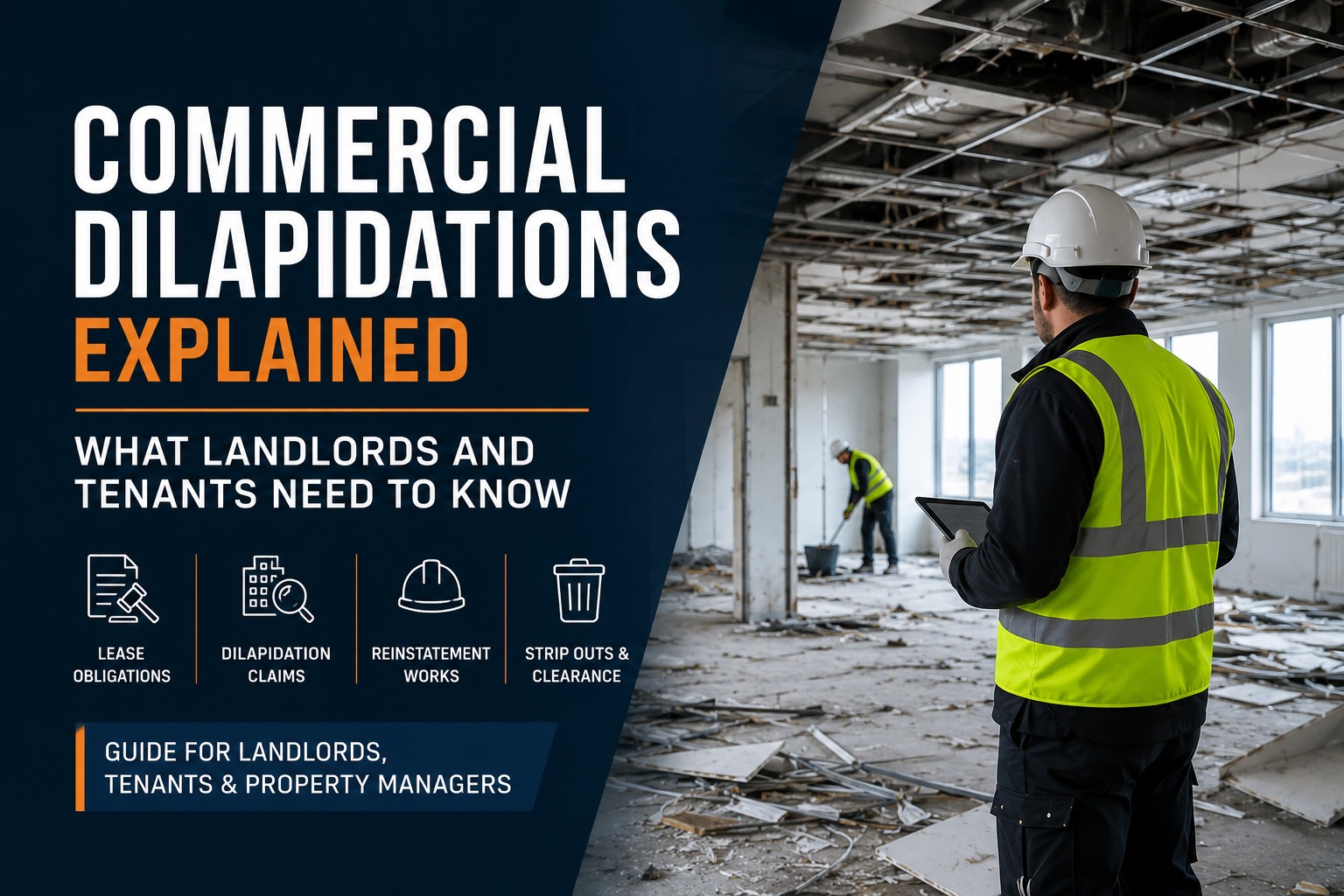
Commercial dilapidations are repairs, reinstatement works, strip outs, and restoration activities required to return a commercial property to the condition specified in a lease agreement. These works are commonly required when a tenant vacates an office, retail unit, warehouse, or commercial building.
What Are Commercial Dilapidations?
Commercial dilapidations refer to breaches of lease obligations relating to the condition of a commercial property.
When a lease ends, landlords may require tenants to:
- Repair damage
- Remove alterations
- Reinstate original layouts
- Complete decoration works
- Clear the premises
- Restore building services
The purpose is to return the property to a condition suitable for re-letting or redevelopment.
Why Do Dilapidation Claims Happen?
Most commercial leases contain clauses requiring tenants to maintain and return premises in a specified condition.
A landlord may issue a Schedule of Dilapidations identifying:
- Outstanding repairs
- Damage to the property
- Alterations requiring removal
- Reinstatement requirements
- Decoration obligations
The schedule forms the basis of the dilapidation works required.
Common Commercial Dilapidation Works
Office Strip Outs
Many office tenants install:
- Partition walls
- Meeting rooms
- Raised flooring
- Data cabling
- Additional electrical systems
At lease end these often require removal.
Reinstatement Works
Commercial leases frequently require:
- Layout reinstatement
- Ceiling repairs
- Flooring replacement
- Decorating
- Making good works
The extent of reinstatement depends on the lease terms.
Mechanical & Electrical Removals
Many properties contain tenant-installed infrastructure such as:
- Air conditioning systems
- HVAC equipment
- Data cabling
- Electrical installations
- Security systems
These may need removing before handover.
Related Service:
Site Clearance & Waste Removal
After dilapidation works are complete, properties often require:
- Waste removal
- Furniture disposal
- Equipment clearance
- Final cleaning
Commercial Dilapidations for Different Property Types
Offices
Common requirements include:
- Partition removal
- Decoration works
- Flooring replacement
- M&E strip outs
Retail Units
Retail dilapidations often involve:
- Shop fitting removal
- Signage removal
- Display area reinstatement
Warehouses
Warehouse projects frequently require:
- Racking removal
- Mezzanine dismantling
- Infrastructure removal
- Clearance works
Industrial Units
Industrial dilapidations commonly include:
- Machinery removal
- Plant room dismantling
- Factory strip outs
- Infrastructure reinstatement
How Landlords Benefit from Dilapidation Works
Dilapidation works help landlords:
- Re-let properties faster
- Increase asset value
- Reduce refurbishment costs
- Prepare sites for redevelopment
A well-managed dilapidation project can significantly shorten void periods.
How Tenants Can Reduce Dilapidation Costs
Tenants should:
- Review lease obligations early
- Conduct pre-exit surveys
- Obtain contractor quotations in advance
- Complete works before lease expiry where possible
Early planning often results in lower overall costs.
Commercial Dilapidations vs Building Refurbishment
Dilapidations focus on:
- Lease compliance
- Repairs
- Reinstatement
- Handover requirements
Refurbishment focuses on:
- Upgrading a property
- Improving functionality
- Modernising spaces
Although they often overlap, they are not the same service.
Commercial Dilapidation FAQs
What are commercial dilapidations?
Commercial dilapidations are works required to return leased premises to the condition specified within a commercial lease.
Who pays for commercial dilapidations?
This depends on the lease agreement, although tenants are commonly responsible for reinstatement and repair obligations.
What is a Schedule of Dilapidations?
A Schedule of Dilapidations is a document prepared by or on behalf of a landlord outlining lease breaches and required remedial works.
Can dilapidation works include strip outs?
Yes. Many dilapidation projects involve strip outs, reinstatement works, and removal of tenant alterations.
Why Choose HIR Ltd?
HIR Ltd provides complete commercial dilapidation services including:
- Strip outs
- Reinstatement works
- Machinery removal
- Site clearance
- HVAC removal
- Building restoration support
With over 30 years of experience, we help landlords, tenants, developers, and property managers complete projects safely and efficiently.
Get a Quote
For commercial dilapidation works, end-of-lease strip outs, and reinstatement services, contact HIR Ltd today.
📞 Call: 0208 166 1221
📧 Email: info@hirltd.co.uk
📍 Based near Heathrow, operating nationwide – including Slough, Chiswick, Hounslow, Middlesex, Richmond, Wembley, Windsor, Woking, Twickenham and Staines
👉 Contact us today for a fast, safe, and compliant solution.
